-
Title
-
ACT IV: I Could Live in Africa
-
Description
-
I Could Live in Africa is the fourth act in the year-long project Morality, organised by Witte de With.
It is the first exhibition of Morality that looks at the past and highlights the attitude of artists, choosing to be active as groups rather than individuals, with the aim of resisting an hermetic, authoritarian social and political system. The exhibition presents a variety of practices emblematic of a hidden movement that was driven by the need to open a different space from the moral and aesthetic cultural standards prevailing in Poland under and after martial law (December 13, 1981 to July 22, 1983).
Borrowing its title from Dutch filmmaker Jacques de Koning’s documentary on the Polish post-punk and reggae band Izrael, I Could Live in Africa explores the mood shared by the “new wild” artists and the music subcultures (punk, new wave, reggae) in 1980s communist Poland. Determined by a gloomy political and economic context, this mood translated into an eruption of subcultures that managed to circumvent both the limited means of production and the monopoly the ruling regime over publishing and recording. These subcultures thrived against a background of police brutality, closed borders, empty shops, and frequent power shortages. Their aesthetic weapons included anti-regime stencils and graffiti, safety pins, wildly expressive and primitive forms, assemblages of waste and detritus, collages, concerts that turned into ecstatic group rituals, opening receptions that morphed into improvised happenings and zines. Though the times were hardly “funny”, these cultural manifestations were infused with humour, openly sneering at the system and contemptuous of totalitarian propaganda, the lack of democracy, the naivety of mass media, the Church and cultural hypocrisy in general.
While the punk movement of the West was brandishing it’s slogan, no future, the Polish punk artists were deeply invested in a better future. Far from consuming a trend or criticizing from the premises of capitalism, these artists created not only a resistance to what existed but room to exist differently. Inspired by the Rasta philosophy, which pronounced the fall of Babylon, what drove these artists above all was an impulsive energy and a hunger for freedom.
Participants
Mirosław Bałka, Krzysztof Bednarski, Miroslaw Filonik, Wiktor Gutt, Jacques de Koning, Zbigniew Libera, Luxus, Wlodzimierz Pawlak, Waldemar Raniszewski, Josef Robakowski, Darek Skubiel, Marek Sobczyk, Jerzy Truszkowski, Zdzislaw Zinczuk
Curators
Michal Wolinski, Nicolaus Schafhausen, Anne-Claire Schmitz
Network
BWA Wroclaw, Museum of Modern Art Warsaw
Supported By
The Mondriaan Foundation and SNS REAAL Fonds.
<div class="
-
Identifier
-
KIM-EXH-3165
-
10_2
-
Type
-
Exhibition
-
Date
-
2010-02-20/2010-04-25
-
Temporal Coverage
-
2010
-
Publisher
-
Witte de With Center for Contemporary Art
-
Spatial Coverage
-
Rotterdam
-
Language
-
en
-
Is Part Of
-
Exhibition history
-
Rights Holder
-
Kunstinstituut Melly
-
Contributor
-
Nicolaus Schafhausen
-
Relation
-
BWA Wroclaw
-
Museum of Modern Art Warsaw
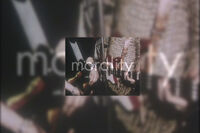 ACT IV: I Could Live in Africa — image 001 Jacques de Koning, I Could live in Africa, 1983 Film still Courtesy of the Artist